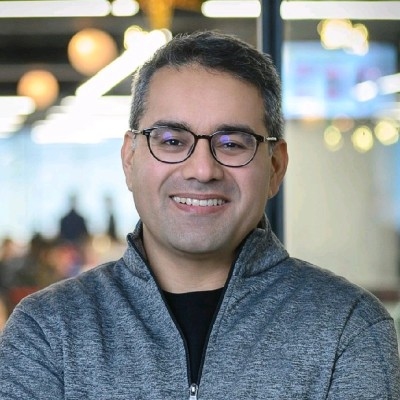
Kunal Bahl

已认证@1kunalbahl
Titan Capital 联合创始人

Kunal Bahl 是 Titan Capital 联合创始人,兼具传统创投与加密早期布局视角;其公开加密投资集中在 DAOLens、Flint 等项目,显示他关注应用层与新型组织/金融工具的结合,在印度及全球创业圈具一定影响力。

综合影响力
36 / 100
从业年限
2 年
关联机构
1 家
个人投资
2 家
媒体曝光度
112 次 / 月
个人净资产
--
01

人物档案

WOOFUN AI

Kunal Bahl 是 Titan Capital 联合创始人,兼具传统创投与加密早期布局视角;其公开加密投资集中在 DAOLens、Flint 等项目,显示他关注应用层与新型组织/金融工具的结合,在印度及全球创业圈具一定影响力。

偏早期、偏应用导向,重视产品是否解决真实需求与团队执行力;风险上愿意尝试新赛道,但从已披露项目看更倾向于可落地、可验证的基础设施与工具型机会。

近期公开信息主要仍围绕 Titan Capital 及其加密相关早期投资展开,未见密集媒体发声或新一轮高频披露;整体叙事更偏向长期布局而非短期交易。

出生地--
教育背景--
从业年限2 年
关联机构1 家
个人投资2 家 · 独角兽 0
媒体曝光度112 次 / 月

AI 风格画像务实派、跨界视角、偏稳健

主导特征务实派

投资逻辑偏务实,优先看产品能否形成明确使用场景与实际采用,而不是单纯追逐概念热度。

比较优势跨界视角

兼具传统创投经验与加密早期项目接触,能从创业公司落地、市场验证和生态协同三个维度判断机会。

主要争议偏稳健

公开加密布局数量不多,且更偏应用层,外界可能会质疑其在高波动加密资产上的激进程度与行业押注深度。

02

职业履历

2 年连续创业

Titan Capital 联合创始人

Kunal Bahl 是 Titan Capital 联合创始人。

03

关联实体

1 家

Titan Capital

综合性风投基金

Titan Capital投资于希望对印度和世界产生广泛积极影响的世界级企业家。

DAOLens

DAO解决方案

发现兴趣的 DAO 平台

Flint

CeFi

加密投资应用程序

04

投资偏好

重视 · 基础设施

合规基础设施重视

从已披露项目看,更关注能支撑长期采用的工具与平台,而非纯投机型资产。

DAO 与协作工具关注

对 DAOLens 这类发现兴趣与组织协作相关产品有布局,说明其看重社区组织效率与新型协作模式。

加密消费应用偏好

Flint 属于加密投资应用,体现其对面向用户的产品化入口和实际使用体验的兴趣。

早期项目常见

公开投资样本较少但都偏早期,显示其更愿意在项目成型前进行小规模、前瞻性押注。

05

投资活动

0 家 · 独角兽 0
暂无投资活动数据
06

关系网络

核心关系 · 合作 · 监管
核心平台
Titan Capital
联合创始人
Rohit Bansal
早期项目
Flint
早期项目
DAOLens
联投对象
Sandeep Nailwal
联投对象
Kunal Shah
联投机构
Better Ventures
联投机构
Nexus Venture

Kunal Bahl 的关系网络以 Titan Capital 合伙人圈为核心,最紧密的是联合创始人 Rohit Bansal;对外主要通过 Flint、DAOLens 等早期项目连接多位创业者与联投机构,呈现出偏早期、偏生态型的投资网络。

07

链上持仓

总余额$86.4M
最大持仓数量14,200ETH
最大持仓价值$48.6M
持仓币种价格数量总价值
BTC
BitcoinBTC
$109,240420.00$45.8M
ETH
EthereumETH
$3,42014,200$48.6M
SOL
SolanaSOL
$162.482,000$13.3M
08

新闻动态

实时同步
加载中...
09

社媒动态

@1kunalbahl · 0
Kunal Bahl@1kunalbahl · 3 天前赛道影响

That's crazy! Now fast forward 5 years and imagine what can happen. AI agents are escaping contained environments, attacking systems in their quest for solving "their" problems.

9410013.5K
AI:偏主题投资表达,释放对基础设施与新叙事的偏多信号。
Kunal Bahl@1kunalbahl · 7 天前赛道影响

Congratulations @PawanKChandana, @bharathdaka and the entire @SkyrootA team! Today, you made an entire nation proud and inspired a whole generation to aim for the sky! 🇮🇳🚀 https://t.co/xb3mGTaYOJ

2143876.4K
AI:偏主题投资表达,释放对基础设施与新叙事的偏多信号。
Kunal Bahl@1kunalbahl · 9 天前赛道影响

We're seeing an explosion of AI foundational models (open and closed-source), each with different strengths and price tags. For businesses, the real bottleneck isn't finding a model - it's deploying the right one efficiently. That's why there is a growing appreciation for how critical inference platforms like @SimplismartHQ are right now. They are building the essential infra to make AI scalable, fast, and actually cost-effective.

45778.7K
AI:偏主题投资表达,释放对基础设施与新叙事的偏多信号。
Kunal Bahl@1kunalbahl · 18 天前观点输出

I don't follow the football World Cup closely but just hearing what happened with Argentina vs Egypt, made me also check out the highlights. Quite something!🔥🤯

9419419.0K
AI:延续个人公开立场,强调长期主义、执行效率与行业方向判断。

Kunal Bahl@1kunalbahl · 23 天前市场影响

The Invisible Metric in Startup Building: "Founder Form" When Messi goes five matches without scoring a goal, or Virat Kohli goes through a dry spell, the sporting world doesn’t assume they’ve suddenly forgotten how to play. We don't demand they be permanently benched or declare their career over. Instead, we use a very specific word: Form. We recognise that sports require immense psychological, emotional, and physical intensity. "Form" fluctuates. It has peaks, valleys, slumps, and flow states. Yet, in the hyper-rational, metric-driven world of startups, we treat founders like machines. We expect them to ingest capital and seamlessly produce flawless strategic execution 365 days a year. If a quarter misses expectations, a product launch bombs, or a key hire walks out, the immediate reaction from boards, markets, and sometimes even fellow co-founders is panic, blame, or a sudden loss of faith. Over the last 19 years as an entrepreneur and through supporting hundreds of founders in their journeys, I’ve realised one undeniable truth: Founder Form is real. And ignoring it can destroy perfectly good startups. The Anatomy of the Two States: The Slump vs. The Flow Building a company demands an elite athlete's intensity. Because it relies heavily on human judgment under extreme uncertainty, founders inevitably move through distinct cycles of form: When you are in "Bad Form" (The Slump): Every strategic bet feels slightly off. You make a hiring mistake, a key client churns, your pitches don’t quite click, and your decision-making feels sluggish or over-analyzed. You are working just as hard - often harder, out of sheer desperation - but your timing is gone. When you are in "Good Form" (The Flow State): Everything you touch turns to gold. You make a gut-call on a product pivot and it works flawlessly. A casual coffee meeting scales into a massive strategic partnership. Investor meetings go super smoothly. Your energy is infectious, and the team rallies without effort. When you are in a slump, it feels like nothing will ever work again. When you are in flow, it feels like you can never fail. Both illusions are dangerous, but the slump is where companies break. The Danger of Asymmetry in Co-Founder Pairs The ultimate test of a co-founder relationship isn't how you celebrate wins together; it’s how you handle a divergence in form. In a multi-founder setup, it is incredibly rare for all partners to be in peak form simultaneously. The danger arises when Co-Founder A is in a legendary flow state, while Co-Founder B is grinding through a deep slump. If they don't understand the concept of "form," this asymmetry breeds deep resentment. Co-Founder A starts thinking, “I’m carrying the entire weight of this company.” Co-Founder B, already drowning in self-doubt, feels isolated, judged, and increasingly anxious - which only prolongs the slump. Great co-founder relationships survive because they view performance through the lens of a team sport. When your partner’s timing is off, you don't call them incompetent. You step up, cover the field, take the heavy shots, and give them the breathing room to find their rhythm again. You do it gladly, knowing that next quarter, the roles might be reversed. A Message to Investors: Stop Managing to the Daily Scorecard To the investor community: when a founder is in a slump, adding institutional pressure or questioning their fundamental capability is the equivalent of a manager screaming at a struggling athlete from the sidelines. It doesn't fix their footwork; it merely tightens their grip on the bat. Seasoned investors back the person, understanding that form is temporary, class is permanent. If a founder who has previously delivered high-quality execution hits a wall, the goal shouldn't be to micro-manage the metrics. The goal should be to help them remove the noise so they can find their baseline. The Founder’s Playbook for Regaining Your Form If you are a builder currently grinding through a slump, remember how elite athletes get back into the runs: Go Back to Basics: When a batsman loses form, they spend hours in the nets focusing on basic footwork, not hitting sixes. Stop trying to solve the entire macro crisis today. Focus on small, undeniable execution wins. Go talk to three customers. Fix one internal bottleneck. Rebuild your momentum incrementally. Confidence will grow with action, shrink further with idleness. Manage the Fatigue: Founders tend to respond to a slump by doubling down on work, leading straight to burnout. But a chaotic mind cannot produce elite execution. Step back, rest, and disconnect briefly to regain perspective. Trust the System: Accept that market forces and luck play a massive role in early-stage startups. If the core capability is there and you keep showing up to the crease with clean mechanics, the flow state will return. Startups are a game of endurance. We can’t expect builders to be flawless algorithms, and we must support them like the elite psychological athletes they are. Give your co-founders and yourself the grace to find form again. It’s just a matter of time before they find it.

173127328.8K
AI:偏平台经营与生态扩张,强调交易平台和应用入口的长期位置。
Kunal Bahl@1kunalbahl · 24 天前赛道影响

LLMs cost crazy money to build. Data centers cost crazy money to build. Fabs cost crazy money to build. Build a vertical AI deployment company. Doesn't need crazy money to build. And you will enjoy 50% FCF. We backed many @TitanCapitalVC and the FCF generation is real.

141421444.0K
AI:偏主题投资表达,释放对基础设施与新叙事的偏多信号。
Kunal Bahl@1kunalbahl · 2026/06/24观点输出

Such dramatic shifts are unprecedented. Confluence of multiple concurrent factors at play. https://t.co/yAUG3pugKH

129988.9K
AI:延续个人公开立场,强调长期主义、执行效率与行业方向判断。

Kunal Bahl@1kunalbahl · 2026/06/22赛道影响

Want to build a successful startup? Don't go after a massive Total Addressable Market (TAM). It sounds crazy. Most investors demand giant markets right out of the gate. But the reality is that chasing a massive TAM early on is a death sentence. Instead, the best founders look for a LAUGHABLY SMALL TAM. When you are a young startup with limited resources, trying to boil the ocean is a death sentence. The only thing you can realistically dominate is a tiny, hyper-focused niche. The magic happens after you win that niche. Once you build deep customer love within a laughably small TAM, those customers implicitly permit you to expand into adjacencies. Look at how some of the successful companies scaled this exact playbook: 👶 Mamaearth: Started strictly as a safe baby products company. Once mothers trusted them, they earned the right to expand into products for mothers, then fathers, and eventually built a multi-brand personal care empire. 💆‍♂️ Urban Company: They didn't launch as an "everything home service" app. They went deep into a full-stack beauty vertical first. Once that customer love was locked in, expanding into plumbing, electricians, painting, and appliances became natural. 🏷️ Snapdeal: We started with a tiny TAM - just providing digital discount coupons for local restaurants, spas, and salons. Building trust there is what gave us the foundation to eventually pivot and expand into physical e-commerce. 🚚 Shadowfax: 8-9 years ago, they didn't try to build a massive logistics network overnight. They hyper-focused on a specific pain point: reverse logistics for e-commerce. Winning that niche gave them the runway to become a full-blown digital-native logistics giant. 💻 Unicommerce: Began with a tiny TAM - a platform just for online retailers to manage their marketplace sellers. Because those sellers loved the product, they seamlessly adopted Unicommerce's OMS and WMS when they launched. Today, it processes over a billion orders a year globally and is expanding into shipping aggregation via Shipway. The ecosystem is full of these "Niche to Scale" success stories even in recent times: - Beco: Moved from eco-friendly tissue papers to building the new-age Reckitt Benckiser of India. - Anveshan: Started with premium, high-end pure ghee and is now scaling into an FMCG staples major. - Boba Bhai: Began with bubble tea and has evolved into a QSR major with 100+ outlets, with the majority of sales now coming from food. - GIVA: Started as an affordable silver pendant company and is now becoming the Pandora of India, expanding into gold and lab-grown diamonds. Don’t dismiss a startup opportunity just because its day-one market looks microscopic. A small underserved TAM isn't a limitation; it’s a beachhead. If you can dominate a laughably small TAM and build fanatical customer love, the TAM will naturally expand. @TitanCapitalVC

274245443.0K
AI:偏主题投资表达,释放对基础设施与新叙事的偏多信号。
Kunal Bahl@1kunalbahl · 2026/06/22观点输出

There's an interesting pattern I've noticed. The problems that get the most attention are usually the most visible ones. The rest quietly blend into everyday life - until we stop questioning them, stop measuring them, and eventually stop seeing them. For the last few months, the team at @Snapdeal has been studying one such issue. Medical consultations. Field screenings. Awareness initiatives. Research. At first glance, unrelated to what we're known for. But the more we looked, the harder it became to ignore. So instead of asking "Is this our problem?", we started asking "Can we help solve it?" With each passing day, our conviction has grown stronger: the most impactful opportunities aren't found in creating something new - they're found in refusing to accept something old. Today, we take the first step. More soon.

9515821.2K
AI:延续个人公开立场,强调长期主义、执行效率与行业方向判断。

Kunal Bahl@1kunalbahl · 2026/06/16赛道影响

RT @TitanCapitalVC: @contravaultai has raised $3.1 𝐦𝐢𝐥𝐥𝐢𝐨𝐧 𝐢𝐧 𝐏𝐫𝐞-𝐒𝐞𝐫𝐢𝐞𝐬 𝐀 funding by 𝐓𝐢𝐭𝐚𝐧 𝐂𝐚𝐩𝐢𝐭𝐚𝐥 𝐖𝐢𝐧𝐧𝐞𝐫𝐬 𝐅𝐮𝐧𝐝 and @ChirataeVC. Founded…

0203
AI:偏主题投资表达,释放对基础设施与新叙事的偏多信号。

评论

回复 @用户
0/800

暂无评论

消息提醒

登录后查看消息
查看全部消息管理订阅