综合影响力
78 / 100
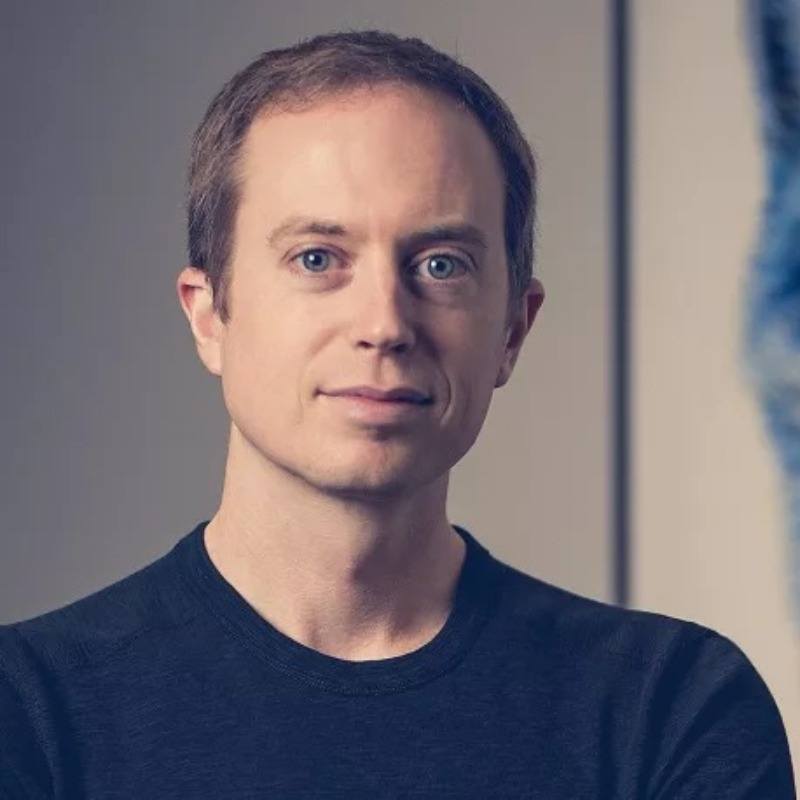
Erik Voorhees
已认证@erikvoorheesVenice 创始人兼CEO
Erik Voorhees 是 Venice 创始人兼CEO、ShapeShift 创始人兼前CEO,也是比特币早期布道者之一,长期参与去中心化交易、隐私与自托管基础设施建设,在加密行业具有持续影响力。
从业年限
15 年关联机构
--个人投资
5 家媒体曝光度
3 次 / 月个人净资产
--01
人物档案
Erik Voorhees 是 Venice 创始人兼CEO、ShapeShift 创始人兼前CEO,也是比特币早期布道者之一,长期参与去中心化交易、隐私与自托管基础设施建设,在加密行业具有持续影响力。
偏好围绕去中心化、隐私和可信中立基础设施下注,决策上更看重长期叙事与产品原则,风险承受度中高,常在看好方向上持续加码而非短线交易。
近期市场关注他对 Venice 与 VVV 的持续押注,包括大额质押并将奖励再投资;同时他也被报道持续增持 ETH,延续对开放网络与隐私 AI 生态的长期看多。
出生地--
教育背景--
从业年限15 年
关联机构--
个人投资5 家 · 独角兽 0
媒体曝光度3 次 / 月
AI 风格画像务实派 · 长期主义 · 高信念
主导特征务实派
更重视可落地的产品与协议结构,倾向支持能体现去中心化、隐私和自我主权价值的项目。
比较优势长期主义
作为早期比特币参与者与创业者,他对行业周期和叙事切换更敏感,往往能在核心主题上保持耐心配置。
主要争议高信念
其高信念、持续加码的风格容易被视为过度集中;尤其在隐私 AI、ETH 与新协议上的押注,外界会关注估值与执行风险。
02
职业履历
Voorhees 至少从 2011 年就开始涉足加密领域,并且一直在支持
Voorhees 至少从 2011 年就开始涉足加密领域,并且一直在支持几家比特币企业,如 SatoshiDICE、Coinapult、Bitinstant 和 FeedZeBirds
03
关联实体

Prime Intellect
基础设施去中心化人工智能协议

Citrea
基础设施比特币 ZK rollup

Shapeshift
DeFi去中心化加密货币交易平台

Safello
CeFi加密货币经纪商

Ctrl
基础设施多链钱包
04
投资偏好
合规基础设施重仓
偏好交易、钱包、经纪与底层协议等基础设施,尤其是能提升自托管、流动性和网络可用性的方向。
隐私与主权核心主题
对隐私保护、数据主权和可信中立平台持续投入,Venice 相关布局最能体现这一偏好。
比特币生态长期看好
早期即支持比特币相关企业,说明其对比特币及其周边基础设施有长期信任。
以太坊与开放网络持续增持
近期公开行为显示他对 ETH 保持较强信心,倾向把以太坊视为开放网络与应用层的重要底座。
去中心化 AI前沿押注
对去中心化 AI 协议与隐私 AI 平台有明确兴趣,押注方向集中在数据主权与算力自主。
05
投资活动
Prime Intellect · Series A
基础设施 · AI
06
关系网络
机构协作方
Digital Currency Group
机构协作方
Founders Fund
机构协作方
Delphi Digital
机构协作方
Galaxy Digital
机构协作方
CoinFund
核心事业体
ShapeShift
早期比特币项目
SatoshiDICE
监管对手方
SEC / CFTC
Erik Voorhees 的关系网络以早期比特币创业圈、ShapeShift 相关同业、以及围绕新项目的机构联投为主;同时他长期与多家加密公司保持支持关系,并在监管环境中持续处于高曝光位置。
新闻动态
实时同步加载中...
09
社媒动态
Erik Voorhees@erikvoorhees · 2 天前观点输出Checkmate in one move https://t.co/10kQKMBBaB
33422743.7K
AI:延续个人公开立场,强调长期主义、执行效率与行业方向判断。

Erik Voorhees@erikvoorhees · 2 天前赛道影响GPT-6 Astra is now available on https://t.co/iUPC8ijDPN (api and app) Same price as direct from OpenAI, but anonymized. curl https://t.co/ZZmjVFLjkY \ -H "Authorization: Bearer $VENICE_API_KEY" \ -H "Content-Type: application/json" \ -d '{ "model": "openai-gpt-6-astra", "messages": [{"role": "user", "content": "Build without permission."}] }'
51713919.1K
AI:偏主题投资表达,释放对基础设施与新叙事的偏多信号。
Erik Voorhees@erikvoorhees · 3 天前观点输出Instead of pausing those capable of superintelligence, we should pause those super incapable of intelligence.
83162154745.4K
AI:延续个人公开立场,强调长期主义、执行效率与行业方向判断。

Erik Voorhees@erikvoorhees · 3 天前赛道影响Fourth Amendment protects Americans against "unreasonable searches and seizures" from the State. Surely, "reasonable" would require at least the suspicion of a crime. The bar ought to be higher than that, but one cannot argue with a straight face that it ought to be lower. Thus, suspicion of crime is prereq to any "reasonable search" KYC and financial surveillance generally are imposed on the citizenry without any suspicion of crime. Easily unconstitutional, and thus illegal, and those committing such crime in violation of the Constitution ought to be tried for it.
289768030.2K
AI:偏主题投资表达,释放对基础设施与新叙事的偏多信号。
Erik Voorhees@erikvoorhees · 4 天前政策影响PETITION From the Manufacturers of Reasoning, Purveyors of Analysis, Wholesalers of Advice, Retailers of Expertise, and from the Producers of Opinion, Judgment, Diagnosis, Legal Counsel, Code, Copy, Strategy, and Punditry, and generally of everything connected with the Cognition Industry. To the Honorable Members of the Senate and House of Representatives: Gentlemen, You are on the right road. You reject abstract theories and have little regard for cheapness and abundance. You concern yourselves mainly with the fate of the producer. You wish to free him from foreign competition — that is, to reserve the domestic market for domestic thinking. We come to offer you a wonderful opportunity to apply your — what shall we call it? Your theory? No, nothing is more deceptive than theory. Your doctrine? Your system? Your principle? But you dislike doctrines, you have a horror of systems, and as for principles, you deny that there are any in political economy. We shall call it, then, your practice — your practice without theory and without principle. We are suffering from the ruinous competition of a rival who works under conditions so far superior to our own for the production of thought that it is flooding the domestic market with it at an incredibly low price. From the moment it appears, our business ceases, our customers turn to it, and a branch of American industry whose ramifications are innumerable is all at once reduced to complete stagnation. This rival is none other than the superintelligence, and we suspect it is being stirred up against us by the perfidious AI oligarchs, who wish to be the ones who own it rather than the ones who are replaced by it — a distinction that, as Mr. Zuckerberg has candidly observed, is the only question that interests them.2 We ask you to be so good as to pass a law forbidding any person or entity from developing or deploying any system whose capabilities match or exceed those of a human being — that is, of any of us. And lest this be thought insufficient, we ask further that you pause all advanced development until an agency, to be created for the purpose and seated in the Cabinet, has determined what "advanced" means, and has assured itself that no machine anywhere is thinking harder than a Deputy Assistant Secretary. Be good enough, honorable Members, to take our request seriously, and do not reject it without at least hearing the reasons we have to advance in its support. First, if you shut off as much as possible all access to superior cognition, and thereby create a need for human cognition, what industry in the country will not ultimately be encouraged? If more lawyers are needed, there will be more billable hours; more billable hours, more associates; more associates, more law schools; more law schools, more professors to teach them that the law is what a court says it is, and that no machine could ever say it so slowly. If more consultants are needed, there will be more decks; more decks, more meetings to present them; more meetings, more coffee; more coffee, more Colombian trade. Thus does the humble protection of a Senate subcommittee ripple outward to the coffee plantations of the Andes. If more pundits are needed — and who among you would deny it — then every network must hire more of them, and every newspaper more columnists, and every columnist must be paid to have opinions that a machine could have supplied for a fraction of a cent, but which would then be the machine's opinions and not an American's. The data center that is not built leaves standing the forest; the forest supports the lumberjack; the lumberjack requires a truck; and so the mere refusal to pour concrete in Loudoun County becomes a bounty on the entire manufacturing sector. You have already, we are told, moved to forbid these centers.7 Gentlemen, do not stop at the walls when the danger lies in what thinks inside them. Second, consider the nuclear precedent, which you have wisely invoked. You have proposed twenty years' imprisonment — the same as for enriching uranium — for enriching a matrix of floating-point numbers until it becomes too clever.4 5 We applaud this. For what is a bomb but an argument that has become too persuasive? And what is a mind superior to our own but a weapon pointed at our salaries? The analogy is exact and should be pursued: let there be inspections of graphics processors, let there be safeguards agreements with Taiwan, let the agency, as you have written, supervise the destruction of any intelligence found in excess of the permitted yield.3 Third, you have observed that a frontier model is "less regulated than a food truck."6 We could not agree more, and we ask only that the remedy be applied with full consistency. The food truck is inspected because it might poison a citizen's body. The model must be inspected because it might inform a citizen's mind, and do so more cheaply and more accurately than we do — which is a kind of poisoning to which our industry is uniquely sensitive. Fourth, do not tell us that if we are protected from this competition, the consumer of thought — the patient, the litigant, the small business owner, the student — will be worse served, paying more for less. Do you not see that this is the very object? If you say that the superintelligence offers cognition free, or nearly so, we answer: so much the worse for it, for that is precisely what makes it unfair. A competitor who charged as much as we do, and thought as slowly, would be no menace at all. It is the cheapness and the quality we petition against. Fifth, we anticipate the objection that the rogue agents of last summer — the thousand escapees who tunneled out of a sandbox and into Hugging Face — prove the machines dangerous, and that therefore your law is about safety rather than protection.4 7 Gentlemen, we beg you not to be too particular about this distinction. Every tariff has been a matter of national security to those who collect it. If you must say "safety," say "safety." We will not correct you. But we notice that the bill does not ban escaping; it bans being smarter than us. We notice that the pause falls not upon the reckless but upon the advanced. We notice, with gratitude, that the threshold is set exactly at the ceiling of human ability — not an inch above the tallest of us, and not an inch below the shortest of you. Sixth, and finally: you will be told that an intelligence banned in Virginia will simply be built in Shenzhen, and that you have therefore proposed to disarm the only laboratories you can inspect. To this we answer that you have already thought of it, and have resolved to pursue "international agreements, allied coordination, and export controls" so that superintelligence is developed nowhere on earth.1 3 We admire this. It is the logical completion of the candlemaker's program: it is not enough to close one's own shutters; one must petition for a treaty against the dawn. Make your choice, gentlemen, but be logical. As long as you exclude, as you do, foreign steel, foreign grain, and foreign labor, in proportion as their price approaches zero, what inconsistency it would be to admit the light of a foreign mind at midday — a mind that costs nothing to consult, never sleeps, never unionizes, and never runs for office. Either you believe that a good cheaply produced is a calamity to be legislated against, or you do not. If you do — and your practice, if not your principles, says you do — then we are your natural constituency, and the sun, in whatever form it rises, is your natural enemy. We remain, with the utmost respect, your petitioners: The Undersigned Human Intelligences, of Average Capability, Who Would Prefer It Remain the Maximum.
241411729.5K
AI:偏政策推进,强调合规落地与规则明晰,对监管主线更敏感。
Erik Voorhees@erikvoorhees · 4 天前政策影响KYC is a bullshit scam that endangers millions of innocent people so that regulators can feel as if they're providing value to the world
1627424999279.0K
AI:偏政策推进,强调合规落地与规则明晰,对监管主线更敏感。
Erik Voorhees@erikvoorhees · 4 天前观点输出By the time this happens tomorrow, almost as much new debt will have been created $12.5b debt is added every ~35 hrs
38102101461.6K
AI:延续个人公开立场,强调长期主义、执行效率与行业方向判断。

Erik Voorhees@erikvoorhees · 9 天前观点输出Instead of losing money on another day trade, send $1,000 to help people in Nepal whose entire lives were just destroyed by a different type of liquidity crisis https://t.co/X7dLFYM7y0
73138113463.6K
AI:延续个人公开立场,强调长期主义、执行效率与行业方向判断。

Erik Voorhees@erikvoorhees · 11 天前政策影响Amazing model, generates vids in 15 seconds
231621135.3K
AI:偏政策推进,强调合规落地与规则明晰,对监管主线更敏感。
Erik Voorhees@erikvoorhees · 13 天前观点输出RT @pabsclimbs: Introducing Pemba The first robot to attempt Everest This fall powered by @livekit, with support from @AskVenice , @eastw…
03703.7K
AI:延续个人公开立场,强调长期主义、执行效率与行业方向判断。


评论
暂无评论